A breakdown guide of the top five developing trends in STEM education for students.
By: Corey Iles
The new year brings about many changes and personal resolutions for academic students. As we close the final chapter this year in 2026, the STEM field will be developing new strategies in education. STEM students both current and new alike will want to stay abreast of new developments and STEM-related tactics. In 2026, we have seen the STEM field prioritize hands-on learning approaches compared to spectating, computational thinking, robotics, and E-sports gaming that have also been integrated into STEM curriculum. These advancements in STEM are currently pushing the envelope in education currently, but where does that leave us in 2027? Here’s a breakdown of what to expect in the new year and goals you should set in the new year.
Banilower et al. states, “The 2027 NSSME+, the seventh iteration of the study since its inception, will continue monitoring the status of science, mathematics, and computer science education in the U.S. The study, conducted by Horizon Research, Inc. with assistance from Westat, will examine policies and practices related to STEM education, including the extent to which instruction currently models effective, evidence-based teaching practices, and factors that influence teachers’ decisions about content and pedagogy”.
Learn the ethical use of artificial intelligence that will be more prevalent in STEM.
The nature of artificial intelligence adoption being piloted in classrooms has proven to become a complicated subject for student instruction. Many instructors are navigating the ethics for using artificial intelligence working with school officials on the governance of AI usage in classrooms. Digital literacy will encourage consistent messaging to instruct students on when to use artificial intelligence in an appropriate setting. Students will learn to navigate how to responsibly use AI and integrate traditional learning tools to leverage critical thinking skills.
Start Project-based learning and portfolio techniques that take center stage
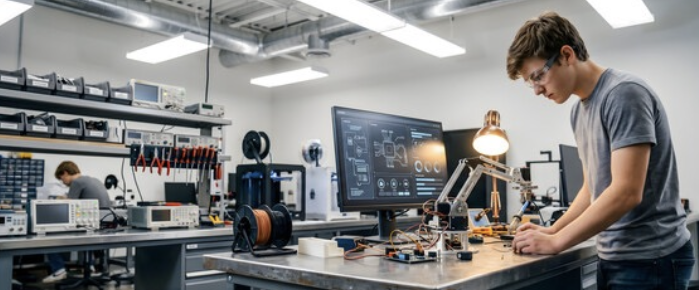
Project based learning has made its way into the practice of STEM but will fundamentally change to become more rigorous tackling real world challenges. Students will learn to how to design like working engineers in the industry modeling projects to present to community stakeholders. Students engaged in the practicum will also benefit from using scaffolding modeling projects to be used as prototypes and implement testing techniques. The Future of Education Technology Conference is holding a presentation early January 2027 allowing students to leave showcasing their body of work in a portfolio project.
Prioritize hands-on engineering and troubleshooting strategies over textbook theory
Hands-on engineering will be prioritized over learning textbook-based theoretical principles. Instructors will balance using technology with traditional teaching practices. Instructors find that using tools such as augmented reality, simulations and adaptive learning tools will help integrate teachers and students fundamental principles. Mindlabs predicts turning abstract concepts that students visualize and create actionable data that can provide experiences beyond traditional classrooms that are unable to replicate.
Be proactive and ask your instructor about quantum computational courses that are expected to grow in 2027.
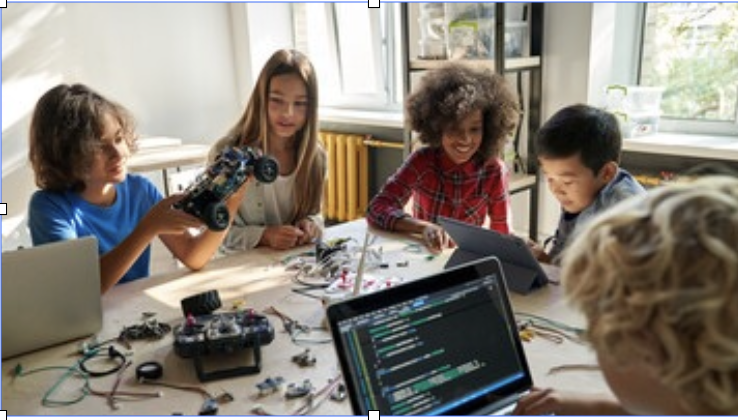
The Quantum computation market is expected to grow in 2027 and with that growth spurs increased attraction in sectors such academia, commercial and government areas. An article by HPC Wire states “ We estimated that in 2024 last year, the quantum market was worth about $1.07 billion. We’re projecting a 27% annual growth rate out to 2027 which brings the total market to about 2.2 billion in 2027. The key here really is the fact that quantum computing is viewed as being attractive to almost every sector that spans academia, commercial and government”. Take a look at Computing at school, a site that provides webinar resources to provide classroom tested teaching materials in quantum algorithms and circuits to introduce emerging trends in computation and inspire confidence.
Enhance your cybersecurity skills next year as the digital landscape changes to stay ahead.
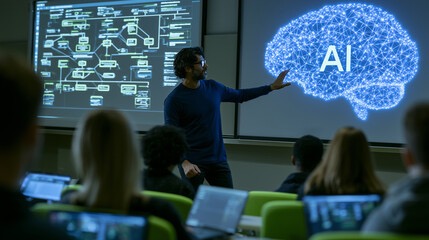
Emerging trends are showing that high school classes are incorporating cyber security curriculum through a variety of methods. One method trial is incorporating Advanced Placement Cybersecurity courses in the 2026-27 school year. There is a front-facing difficulty in finding enough teachers to instruct rigorous education in cybersecurity. Schools like Fortinet Technical Institute has announced a two-year cybersecurity curriculum with educator professional development and classroom technology. Cyber.org also provides a free secondary educational resource in cybersecurity through grades K-12.
###

About the Author:
Corey Iles is currently a media relations intern for NSTEM. He is currently a graduate student at the University of North Texas with a Bachelor of Arts in Journalism concentrating in public relations and a certificate of legal studies. He is pursuing a Masters of Science in Digital Communications Analytics program at University of North Texas from the Mayborn School of Journalism. Corey lives in Arlington, Texas where he continues to write about emerging pr trends.
Sources:
Banilower, E., Heck, D., Malzahn, K., & Ochsendorf, R. (n.d.). The 2027 national survey of science, mathematics, computer science, and engineering education. CADRE. https://cadrek12.org/projects/2027-national-survey-science-mathematics-computer-science-and-engineering-education
Dhopatkar, C. (2026, August 31). Free high school cybersecurity curriculum for CTE. Technical Education Post. https://www.techedmagazine.com/free-high-school-cybersecurity-curriculum-cte/
Don’t just learn it, build it: Launching authentic stem projects that matter with PBL. FETC 2027. (n.d.). https://www.fetc.org/agenda2027/dont-learn-build-launching-authentic-stem-projects-matter-pbl
Healey, M. (2026, September 17). 5 largest education trends for the 2026-2027 School Year: Discovery education blog. Discovery Education. https://www.discoveryeducation.com/blog/educational-leadership/2026-2027-school-year-trends/
Mills, C. (2026, June 8). 5 STEM education trends to watch in 2026-2027. MindLabs. https://exploremindlabs.com/blogs/news/5-stem-education-trends-to-watch-in-2026-2027
Russell, J. (2025, June 18). Summer slide show: Key 2027 quantum computing trends in seven slides. HPCwire. https://www.hpcwire.com/2025/06/18/summer-slide-show-key-2027-quantum-computing-trends-in-seven-slides/
Schmidt, J. (2026, September 16). Free webinars for teachers: Bringing quantum computing into STEM education. Computing at School. https://www.computingatschool.org.uk/forum-news-blogs/2026/september/free-webinars-for-teachers-bringing-quantum-computing-into-stem-education/